
Running one gym is complex. Running ten or more locations while maintaining the same member experience is a different challenge entirely. Screens have quietly become one of the most powerful tools in solving that challenge. From class schedules to motivational content, digital displays now shape how members perceive your brand every day.
Modern digital signage systems allow gyms to deliver real-time updates, improve engagement, and streamline operations across locations . But the real opportunity lies deeper. It is not just about screens. It is about controlling experience, consistency, and communication at scale.
Why Screen Management Matters Across Locations
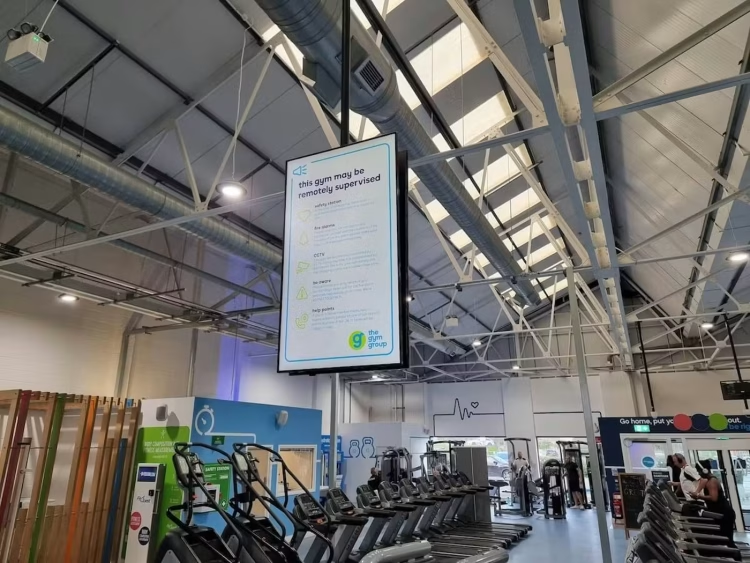
When multiple gym locations operate independently, inconsistency quickly appears. Messaging differs, promotions clash, and the brand begins to fragment. Centralized screen management changes that dynamic.
The role of centralized control
A connected signage system allows you to manage all screens from one platform, ensuring consistent messaging while enabling fast updates .
Key advantages include:
- Instant updates across all locations
- Unified brand messaging and visuals
- Reduced operational workload
- Real-time scheduling and automation
This approach is not just efficient. It creates a synchronized environment where every member, regardless of location, experiences the same brand identity.
Centralized digital signage systems enable remote updates, scheduling, and dynamic content delivery across multiple locations.
Building a Consistent Experience With Workout Screens
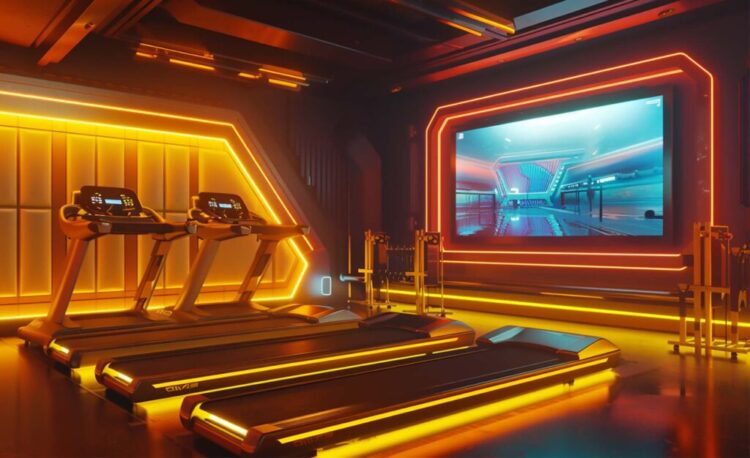
Consistency is not just visual. It is experiential. Members should feel the same energy, clarity, and motivation whether they visit your flagship club or a smaller branch.
This is where Workout Screens become a strategic asset rather than just a display tool. They allow gyms to standardize training guidance, promotional messaging, and brand tone across all locations, ensuring every screen reinforces the same identity.
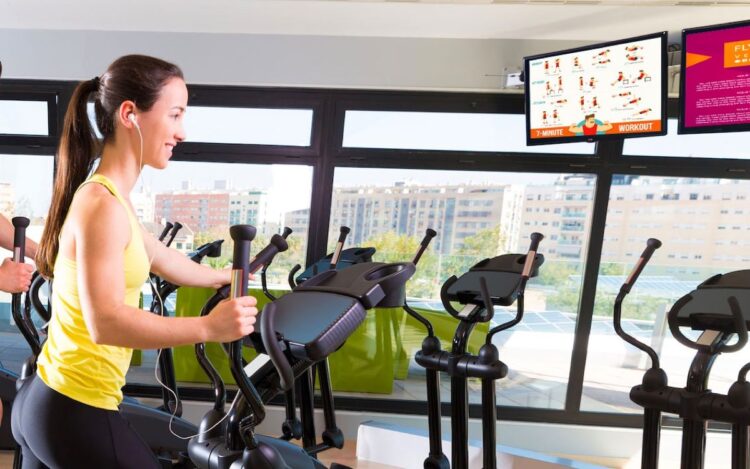
Digital screens can display workout tutorials, schedules, and motivational content, helping members stay engaged and informed throughout their visit . When managed centrally, this content becomes a unified voice across your entire network.
What Central Control Actually Looks Like in Practice
It is easy to talk about control in theory. In practice, it is about precision, timing, and flexibility.
| Feature | Impact on Multi-Location Gyms |
| Central dashboard | Manage all screens from one place |
| Real-time updates | Immediate communication changes |
| Content scheduling | Align messaging with peak hours |
| Local overrides | Adapt messaging per location |
With this structure, gyms can maintain consistency while still adapting to local needs. That balance is what separates rigid systems from intelligent ones.
Enhancing Member Engagement Without Losing Control
Engagement is often seen as something creative and spontaneous. But in a multi-location environment, it must also be structured.
Digital screens improve member experience by delivering clear information, motivating content, and entertainment during workouts . The challenge is ensuring that this content feels fresh without becoming chaotic.
Smart engagement strategies:
- Rotate content based on time blocks
- Combine global campaigns with local highlights
- Use data to adjust messaging performance
Did you know?
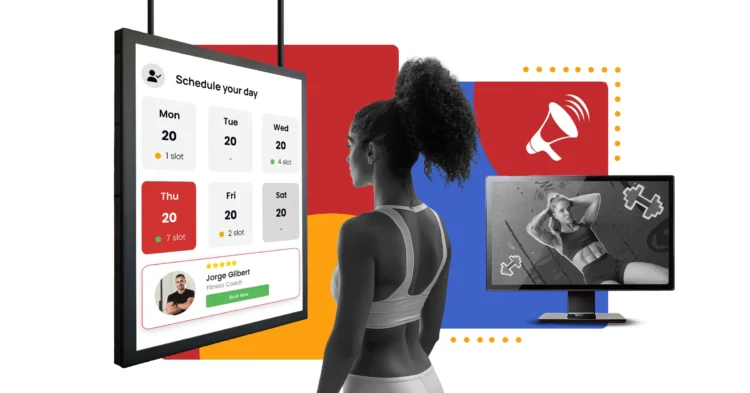
Gyms using digital signage can improve class participation simply by making schedules more visible and dynamic.
This shows that engagement is not always about adding more content. It is about delivering the right content at the right moment.
Brand Consistency as a Competitive Advantage
In a crowded fitness market, brand consistency is not optional. It is a differentiator.
Every screen in your gym network acts as a micro touchpoint. Colors, typography, messaging tone, and visuals all contribute to how members perceive your brand. Digital signage allows these elements to be controlled and replicated precisely across locations.
More importantly, it replaces outdated static materials with dynamic, unified communication that strengthens recognition and trust .
What consistent branding achieves:
- Stronger member loyalty
- Clearer brand identity
- Higher perceived professionalism
- Increased cross-location trust
Consistency does not limit creativity. It provides a framework within which creativity can scale.
Creating a Scalable System for the Future
Growth introduces complexity. Without the right infrastructure, every new location increases the risk of inconsistency.
A scalable screen management system ensures that expansion does not dilute your brand. Instead, it strengthens it.
Think of your screens not as hardware, but as a network. A living system that communicates, adapts, and evolves alongside your business.
The gyms that succeed in this space are not simply installing displays. They are designing experiences. They are building systems where central control and local relevance coexist seamlessly.
And when that balance is achieved, every location feels like part of something bigger, without losing its individual identity.
FAQs
How long does it take to fully deploy a multi-location screen system?
Most gym networks can deploy a basic system in 2 to 6 weeks. The timeline depends on the number of locations, hardware setup, and content preparation.
A simple rollout might include installing screens, connecting media players, and configuring a cloud system. Larger networks may take longer due to coordination across sites.
What hardware do I actually need to get started?
You need three core components: a display screen, a media player, and a content management system (CMS). These work together to deliver and control content.
Some gyms also add mounts, cables, and network connections depending on layout. Start small with key zones like reception or cardio areas, then scale.
Can gym screens support multiple languages across locations?
Yes. Most modern systems allow multilingual content and region-specific messaging.
This is especially useful for gyms with diverse member bases or international locations. You can assign different languages to specific screens or time slots.
Can gym screen systems generate additional revenue?
Yes. Screens can display paid promotions from partners like supplement brands or local businesses.
Many gyms use this to create a secondary income stream while keeping content relevant to members.
What mistakes should gyms avoid when implementing screen systems?
The biggest mistake is treating screens as decoration instead of communication tools.
Other common issues include:
- Overloading screens with too much text
- Not updating content regularly
- Ignoring placement strategy
Screens work best when content is clear, targeted, and easy to consume during workouts.
How do you measure the success of gym screen management?
Start with simple metrics: class attendance, member engagement, and promotion performance.
For example, if a class fills faster after being promoted on screens, that is a clear signal of effectiveness. Some systems also provide analytics on content performance.
Can digital screens integrate with other gym systems?
Yes. Many platforms integrate with booking systems, CRM tools, and scheduling software.
This allows automatic updates, such as showing real-time class availability or trainer schedules. It reduces manual work and improves accuracy across locations.